

The product problem
Student identity, assignments, card services, feedback, and campus resources often live in separate journeys. University App brought those concepts into a coherent native interface backed by consistent service contracts.
Final-year project · September 2025 – May 2026
A student-focused platform built end to end: a native SwiftUI experience, an authenticated Go API, a React administration portal, PostgreSQL persistence, and reproducible containerized environments. The project was completed in May 2026.
The project explored how frequently used student workflows could share one mobile entry point and one authenticated platform core.
Student identity, assignments, card services, feedback, and campus resources often live in separate journeys. University App brought those concepts into a coherent native interface backed by consistent service contracts.
The first delivery had to demonstrate the complete path from interface to stored data within a final-year scope. By May 2026, the completed project connected the native app, API, administration portal, database, and reproducible deployment environments into one end-to-end platform.
The iOS client communicates with the project API for authenticated student data and service operations.
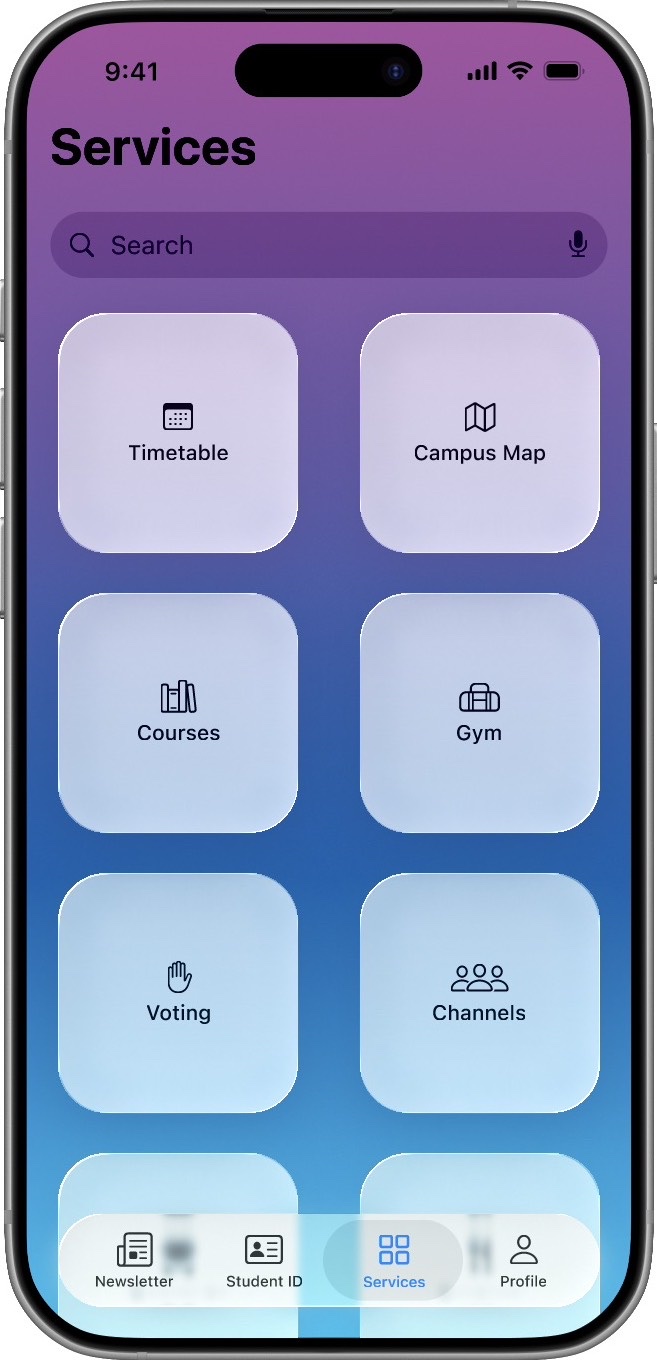
Authenticated profile retrieval plus QR and barcode generation and verification.
Card requests, assignment tracking and submission, feedback, and telemetry endpoints.
A separate React portal supports staff authentication and administrative workflows through the same API boundary.
The published screenshot contains no student identifiers. Digital student ID card imagery from the project is intentionally omitted because its demo content includes identifying data.
The architecture keeps the native experience independent from administration and persistence, with the Go API acting as the authenticated contract between them.
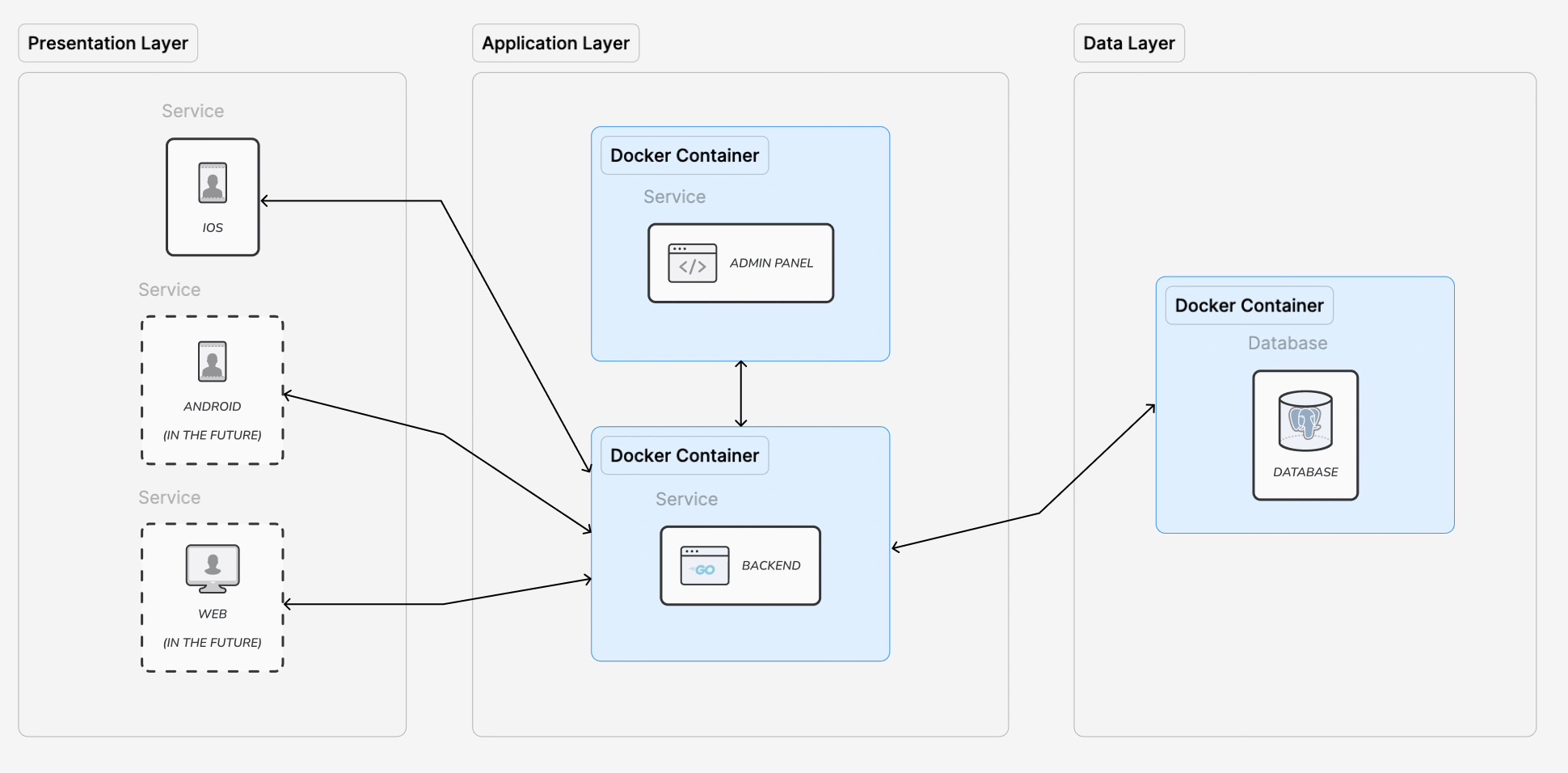
The design favored explicit boundaries and reproducible environments over hiding the system inside one application.
Views, state, and service calls remain separated so student workflows can evolve without concentrating behavior inside interface code.
A versioned Go REST API, JWT bearer tokens, and PostgreSQL give both student and staff experiences one consistent source of truth.
Docker Compose supports local development, while Kubernetes base resources and overlays make deployment boundaries explicit.
The completed project demonstrates a working vertical slice across the platform.
The final-year delivery connected a native iOS interface to implemented authentication, student data, verification, card-request, assignment, feedback, and administrative workflows.
SETU listed University App in its 2026 Software Development Showcase, marking the completion of the final-year project in May 2026.